
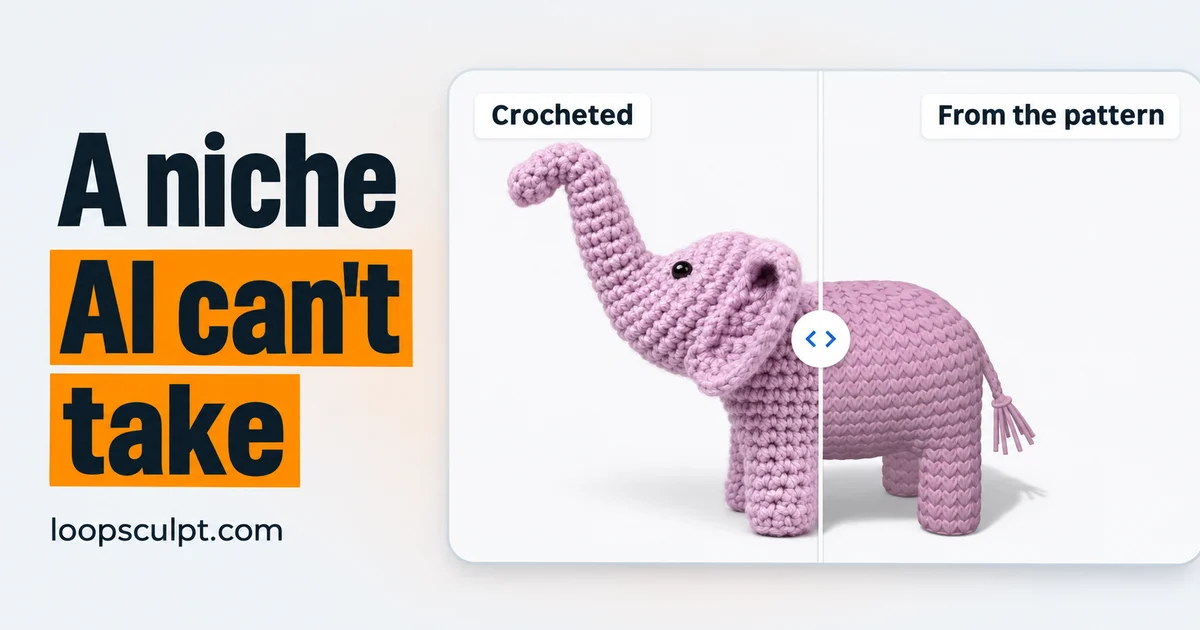
Yesterday Anastasia and I launched Loopsculpt, a pattern editor for amigurumi, the small crocheted toys. You write the pattern the way you always do, and the toy takes shape in 3D next to it.
Anastasia designs the toys and sells her patterns on Faunula. She wrote about building that shop on this blog last month. I build the software. Here I want to explain why we picked such a narrow niche and how we plan to get Loopsculpt noticed when it starts with no audience and no links.
Written in November 2026, the day after launch.
A toy is rarely right the first time
Loopsculpt started as the tool Anastasia was missing. She explains the problem better than I can, so here it is in her words, from our About page:
A toy is rarely right the first time. The ears sit too low, the body wants one more round, the trunk should curl further. On paper each of those is a line or two. To see it, I had to crochet the piece again.
What Loopsculpt does
You type the rounds as crocheters already write them, in US or UK terms, German, French, Spanish, Dutch or Ukrainian. The editor builds the toy from those rounds and checks the stitch count of every line as you go.
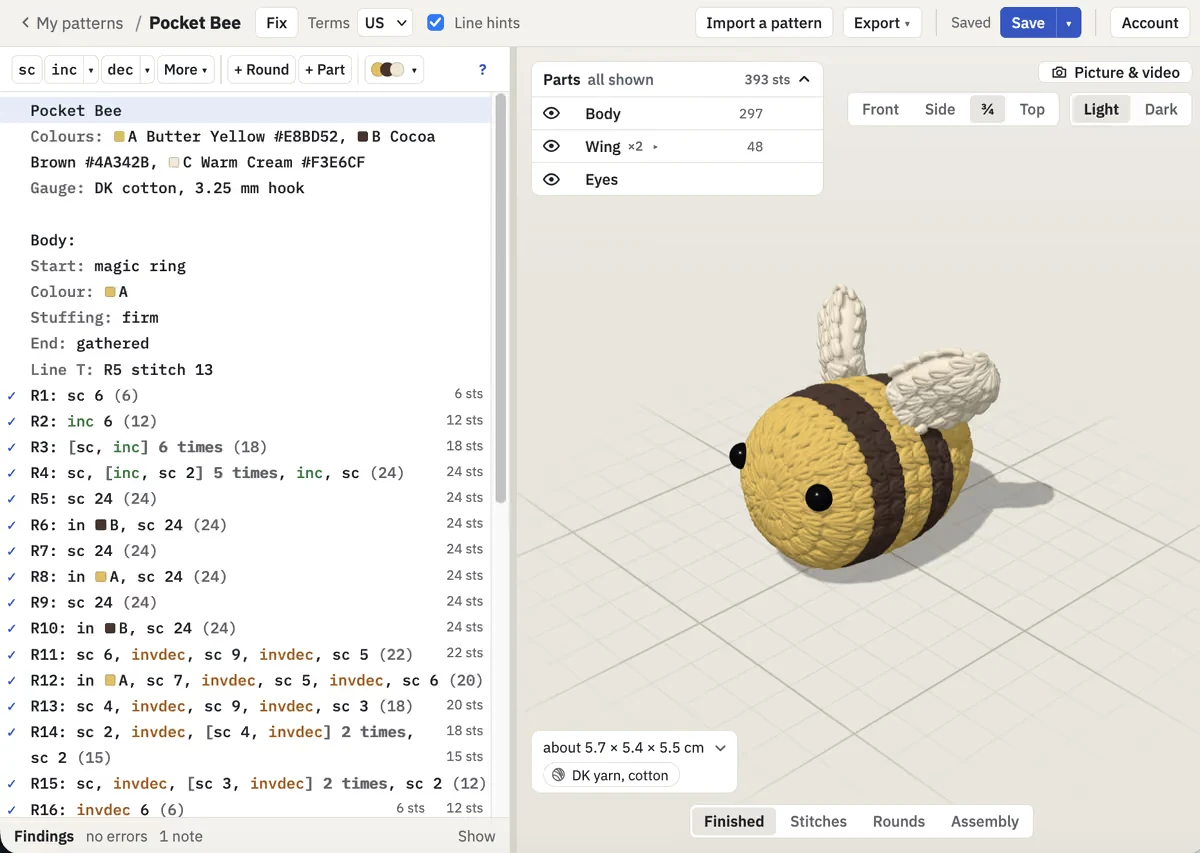
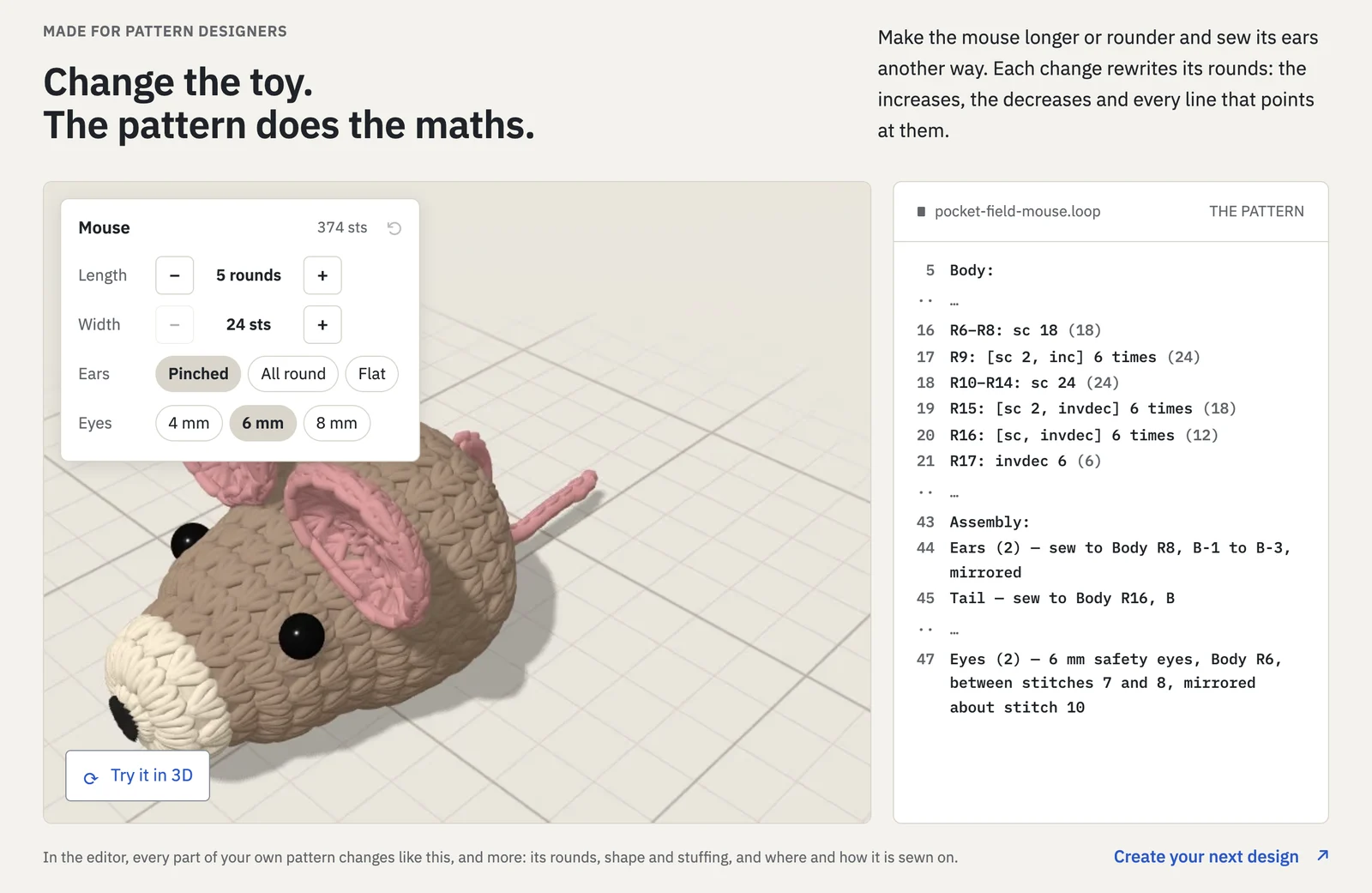
It also works the other way round. Make the body longer or rounder, or sew the ears on differently, and the pattern rewrites itself: the increases, the decreases and every assembly line that points at them.
The obvious question is how close the model gets to a real toy. On the home page we put one of Anastasia’s toys, the Safari Elephant, next to the model drawn from its pattern.
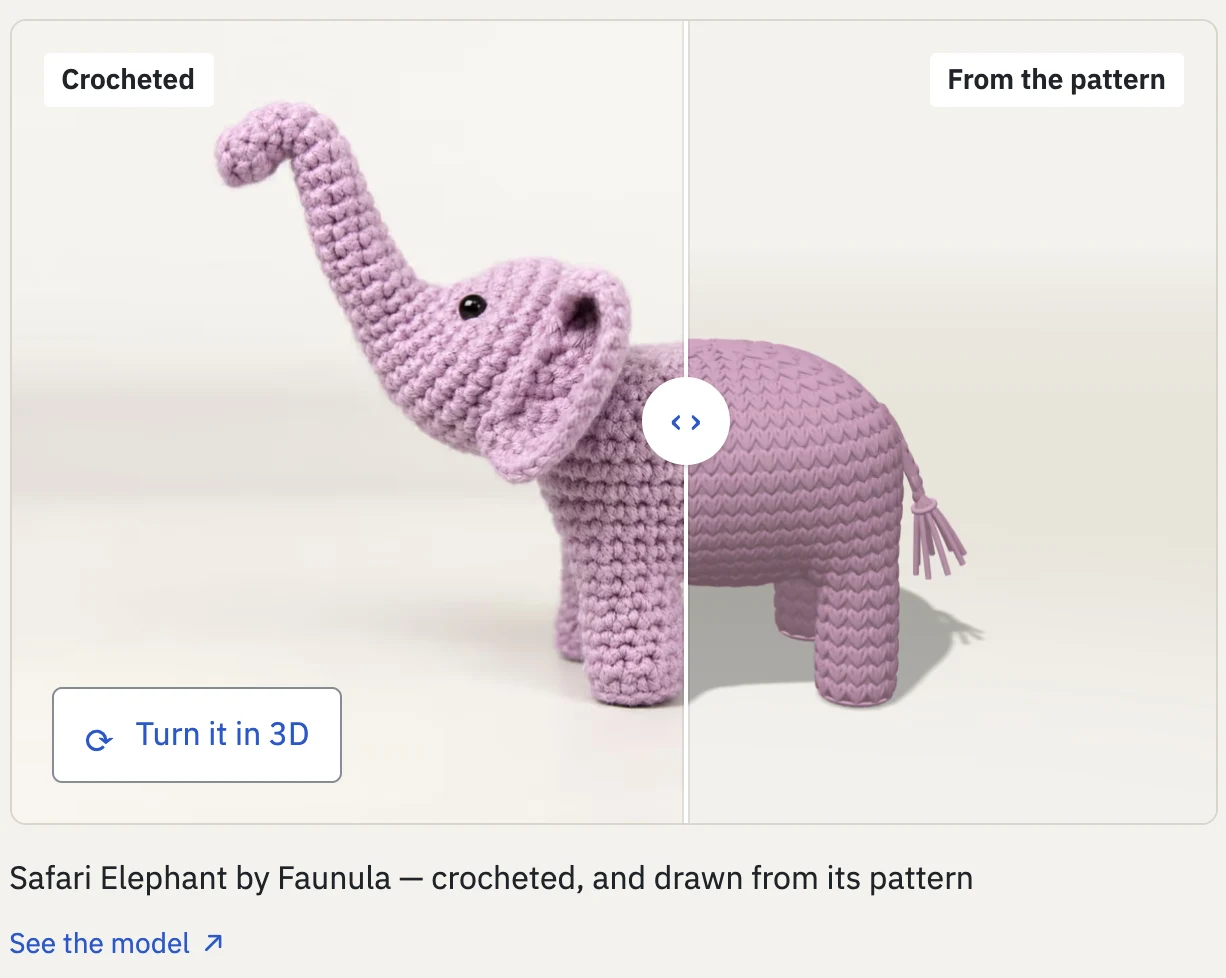
Close, but yarn, tension and stuffing still change the finished toy, so Anastasia crochets every design before she publishes it. Loopsculpt is in a free public beta, made for amigurumi and other crochet toys, and some stitches and constructions aren’t supported yet.
Why this niche
Crochet is still made by hand. Wikipedia says knitting can be done by machine, “while many crochet stitches can only be crafted by hand” (crochet machines are still being developed). So each crocheted toy is made by a person following a pattern that someone wrote and tested.
A pattern is a promise: follow these rounds and you get the toy in the photo. Buyers on Etsy have been finding out that some patterns don’t keep it. In 2024 NBC News collected one-star reviews of crochet patterns sold with AI-made pictures, like this one: “The pattern looks nothing like the picture that advertised the pattern.”
In October 2026 Etsy banned AI-generated patterns, along with recipes and other instructions. As Value Added Resource sums up Etsy’s reason, a pattern has to produce a particular result, and AI-written instructions may contain errors that buyers find only after they’ve spent time and yarn on them. Listings must now also show a real item made from the pattern. Sellers had complained to Etsy’s CEO about exactly this in November 2025: AI-generated crochet patterns that couldn’t produce the toys shown in their listings.
This is where a tool helps the people who write patterns by hand. In Loopsculpt a designer can try an idea in a minute and keep the hook for the versions worth making. And anyone can check a pattern on screen before crocheting a single stitch.
Loopsculpt does use AI, for two jobs. If you bring a pattern written your own way, AI converts it into Loopsculpt’s stricter format, and it can fix formal errors in a pattern. Then you look at the toy in 3D and decide whether it’s right. Every example toy on the site is Anastasia’s design.
This part is only my conclusion, and I can’t prove it: as long as toys are crocheted by hand, someone has to design the patterns and check that they work, so this niche should still be here in a few years.
Ideas come from doing something
If you build niche sites, you have probably tried to find a niche in a keyword tool or a list of “profitable niches”. I don’t think you can pull a good idea out of nowhere like that.
Loopsculpt came out of Anastasia’s crochet. She designs toys and built Faunula to sell the patterns. While designing them, she kept running into the same problem: every change meant crocheting the piece again. Loopsculpt is the answer to that one problem, and I doubt either of us would have seen it from outside the hobby.
It’s close to the advice in my post about building a niche website from a hobby: start from something you, or someone close to you, actually does, and look at what keeps getting in the way.
100 on PageSpeed, with a 3D model on the page
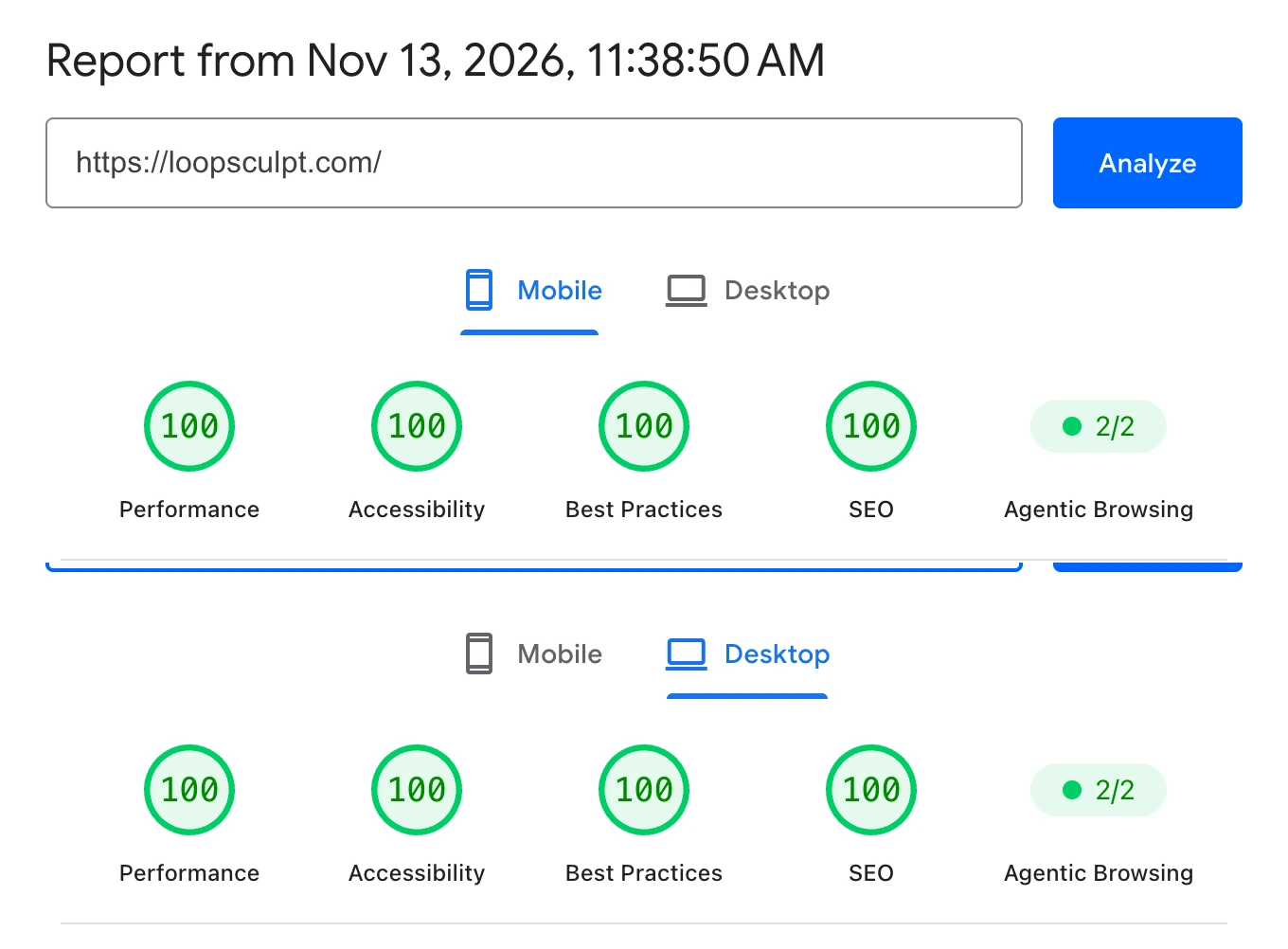
The Loopsculpt home page has two toys you can turn in 3D, and it scores 100 in all four PageSpeed Insights categories, on mobile and on desktop. The report below is from 13 November 2026.
What’s next: getting found from zero
Loopsculpt has been live for one day, so I have no traffic, sign-up or social numbers to report yet. Here is the plan, and I’ll come back with real numbers in a follow-up post.
Social media first. Crochet is a visual hobby, and Loopsculpt already has Instagram, TikTok and YouTube accounts. A pattern turning into a toy on screen is easy to show in a short video.
Then niche content sites. I’ll build sites around crochet and amigurumi topics with Too Much Niche, the WordPress plugin I make for planning a niche site and writing its articles. Their job is to bring in readers who care about the topic and to mention Loopsculpt where it actually helps them. I tried the same approach for a software product in BuildRankEarn.
Try it
If you crochet, or know someone who does, Loopsculpt is free during the beta. You can open the example patterns and turn the toys in 3D without an account. If it can’t read your pattern or gets a stitch wrong, tell us at hello@loopsculpt.com. Those messages decide what we work on next.
When you start a niche site of your own, Too Much Niche can take care of the content plan and the articles.

With 20 years in affiliate marketing, Serge creates practical WordPress tools such as Content Egg and External Importer that help publishers manage and grow their affiliate sites.